

Our Principles
Three of the Principles the Govern Customer Commons are Independence, Autonomy, and Getting Stuff Done
Independence
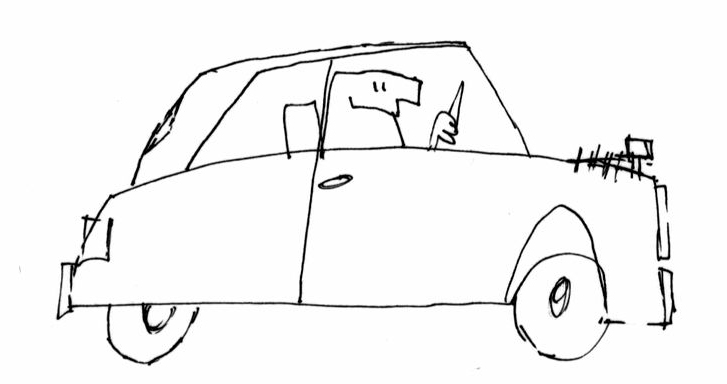
INDEPENDENCE
Exit the Internet’s mega-highways and take the Byway to wherever you want to go. Proffer your own terms, explore a revitalized digital commercial landscape, and keep your whereabouts to yourself.
Get online on your terms.
For independent-minded individuals, the Intention Byway is a route to greater autonomy and productivity. Designed as a way for people to manage their lives online–free from coercive practices such as algorithmic tracking, surveillance, and unfair service contracts–the Byway offers alternative solutions that simplify and amplify our online experience.
Identity. Logins and passwords are burdensome leftovers from the last millennium. There should be (and already are) better ways to identify ourselves, and to reveal to others only what we need them to know. Working on this challenge is the SSI—Self-Sovereign Identity —movement. The solution here for individuals is tools of their own that scale .
Pricing and Payments. For demand and supply to be truly balanced, and for customers to operate at full agency in an open marketplace (which the Internet was designed to be), customers should have their own pricing gun: a way to signal—and actually pay willing sellers—as much as they like, however they like, for whatever they like, on their own terms. There is already a design for that, called Emancipay .
Read more about the Intention Byway here.
Autonomy

AUTONOMY
Evade intrusive ads that follow you around online. Instead, communicate exactly what you want to businesses that want to hear from you.
Tell them what you want.
We’ve grown so used to advertisers telling us what they want us to buy that we’ve become quite literally sitting targets for adtech. So, why not flip the script? At Customer Commons we’re doing just that. With the Intention Byway, customers can safely and securely advertise to the market they want. This is called intentcasting , and to some degree it already exists. (Here is a list of intentcasting providers on the ProjectVRM Development Work list . One we’re currently working with is Intently .)
Getting Stuff Done
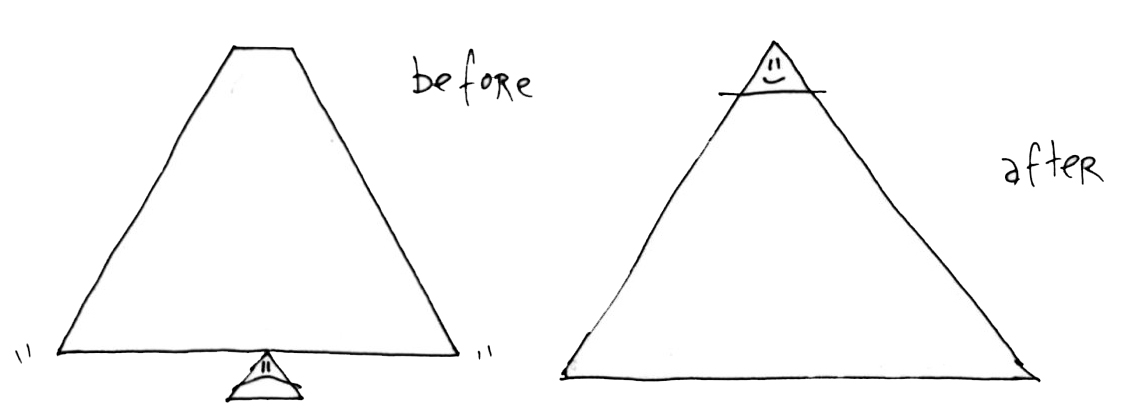
GETTING STUFF DONE
Accomplish your work, follow your muse, do what you want to do. Not what Internet giants would have you do for them.
It’s your move.
Every business buys “solutions” that scale across many customers. But customers don’t have corresponding solutions that scale across many online businesses. Instead, we have as many different ways to relate to companies as there are companies providing us with their own separate solutions for doing that.
What we need are solutions of our own: ones that work with all the entities we deal with.
So, for example, we should be able to change personal information (phone number, last name, address, whatever) across all the companies we engage, in one move. That’s what scale means.
Scale for customers also benefits companies, starting with good data. (National post offices lose $billions every year from bad addresses alone.) In fact there is no shortage of business problems that can only be solved from the customer’s side. Here are two examples:
Subscriptions. Nearly all subscriptions are pains in the butt. “Deals” can be deceiving, full of conditions and changes that come without warning. New customers often get better deals than loyal customers. And there are no standard ways for customers to keep track of when subscriptions run out, need renewal, or change. The only way this can be normalized is from the customers’ side. For our approach to solving subscriptions, see here .
Terms and Conditions. In the world today, nearly all T & C are the ones that companies proffer; and we have little or no choice about agreeing to them. Worse, in nearly all cases, the record of agreement is on the company’s side. Oh, and since the GDPR came along in Europe and the CCPA in California, entering a website has turned into an ordeal typically requiring “consent” to privacy violations the laws were meant to stop. See our Terms section for more about our work on this..
For businesses, the idea of customers solving business problems is “outside the box.” The good news is this: much work is already happening outside that box. And there already exist standards and code for building many customer-side solutions to problems shared with businesses. Yes, there are not yet as many or as good as we need; but there are enough to get started. Our challenge with Customer Commons is to put existing solutions to use, and to foster development of the rest.
If we succeed, i-commerce tomorrow will dwarf what e-commerce alone is today.
Read more about solutions here.
